


The Evolving Reality of Insider Threats
Organizations today face a growing and evolving threat that often originates not from an outside hacker or criminal organization, but from within their own workforce, vendor networks, and trusted partnerships. Insider threats continue to represent one of the most difficult risks to identify, prevent, and mitigate because insiders already possess something external adversaries spend enormous resources trying to obtain: trust, access, and legitimacy.
For decades, many organizations relied heavily on pre-employment criminal history checks and reference verification as their primary safeguard against insider misconduct. While these tools remain important foundational elements of any hiring and risk management program, they are no longer sufficient by themselves. Modern insider threats are far more complex, sophisticated, and dynamic than a simple criminal background screening can detect.
Today’s organizations must embrace a lifecycle approach to screening and risk management that includes pre-employment vetting, continuous evaluation during employment, and post-employment protections. Equally important, organizations must expand beyond traditional background checks and incorporate behavioral analysis, auditing systems, investigative interviewing methodologies, insider threat awareness training, and technologies such as those provided by Verensics to better identify deception, misconduct, fraud, and malicious intent before catastrophic damage occurs.
The reality is that the United States remains an open and trusting society. We value privacy, opportunity, and second chances. However, organizations also have both a right and a responsibility to protect their people, assets, intellectual property, customers, and reputations. Effective insider threat programs are not about creating paranoia or mistrust. They are about recognizing human vulnerabilities and implementing reasonable safeguards to reduce preventable risk.
Real-World Cases That Changed Conversation
History has repeatedly demonstrated that trusted insiders can inflict extraordinary damage on organizations, governments, and even national security. Many of these individuals passed traditional background investigations and initially appeared to be loyal, competent, and trustworthy employees.
One of the most well-known examples is Edward Snowden, a contractor who disclosed massive amounts of classified information from the National Security Agency. Snowden held a security clearance, passed background investigations, and worked within extremely sensitive government environments. Yet his ideological motivations overrode his obligations to protect classified information. His case demonstrated that background checks represent only a snapshot in time and cannot predict future ideological shifts, grievances, or personal rationalizations.
Another powerful example is Chelsea Manning, who leaked hundreds of thousands of classified military and diplomatic documents. Manning had access because of legitimate job responsibilities. The case highlighted how trusted insiders with authorized access can circumvent security controls when organizations fail to detect behavioral warning signs and emotional distress indicators.
The private sector has suffered equally damaging incidents. In one highly publicized case, Tesla alleged that a disgruntled employee intentionally sabotaged manufacturing systems and exfiltrated proprietary data after becoming upset over workplace issues. The employee modified code and shared confidential information externally. The case reinforced how revenge and resentment can motivate destructive insider behavior.
Financially motivated insider crime continues to be one of the most common threats organizations face. Waymo sued former employee Anthony Levandowski for allegedly stealing thousands of confidential files involving self-driving car technology before departing to launch a competing venture. The case became one of the most significant trade secret disputes in the technology sector and demonstrated how departing employees can weaponize insider access for competitive advantage.
Similarly, financial institutions have repeatedly experienced insider-enabled fraud schemes involving employees manipulating wire transfers, opening fraudulent accounts, or stealing customer information. In many cases, the offenders had no prior criminal histories and had worked for their organizations for years before financial pressures or personal greed motivated criminal conduct.
The insider threat challenge has also expanded dramatically through third-party vendors and subcontractors. One of the most significant examples involved the 2013 breach at Target, where cybercriminals gained network access through a third-party HVAC vendor. While not a traditional insider attack in the classic sense, the incident highlighted how trusted vendors and contractors can create massive vulnerabilities if organizations fail to properly vet, monitor, and secure third-party access.
Nation-state recruitment and corporate espionage continue to escalate as well. Numerous cases involving employees recruited by foreign governments to steal trade secrets from U.S. technology, aviation, pharmaceutical, and defense companies have emerged over the past decade. These individuals are often financially motivated, ideologically aligned, or pressured through coercion. Many held respected positions and had previously demonstrated no overt indicators of malicious intent.
Understanding the “MICE” Motivations Behind Insider Threats
The motivations behind insider threats are remarkably universal and are commonly categorized within the well-established “MICE” framework: Money, Ideology, Coercion, and Ego. These motivations, combined with workplace grievances and negligence, form the foundation of most insider incidents.
Financial Gain
Financial gain remains the primary driver behind malicious insider activity. Numerous studies continue to show that money is the leading motivator in most intentional insider cases. Employees, contractors, vendors, and subcontractors may steal trade secrets, customer databases, intellectual property, or proprietary technologies for personal profit or competitive advantage. Others manipulate accounting systems, procurement systems, or payment platforms to commit direct fraud against their employers.
Revenge and Disgruntled Employees
Revenge and disgruntled behavior represent another major category of insider threats. Employees who feel mistreated, overlooked, terminated unfairly, or professionally humiliated may lash out against their organizations. In 2000, a former employee at the Australian company Hunter Water Corporation remotely released millions of liters of raw sewage into local parks and waterways after being denied a job opportunity. The incident demonstrated how technically skilled disgruntled insiders can weaponize access and technical knowledge to create both operational and public safety crises.
Ideological Motivations
Ideological motivations also cannot be ignored. Certain insiders believe they are acting in service of a moral, political, or ethical cause. Whether through whistleblowing, unauthorized disclosures, or activism, these individuals often justify their behavior as serving a greater good. Cases involving Snowden and Manning illustrate how dangerous ideological insiders can become when they believe organizational policies conflict with their personal convictions.
Coercion and External Pressure
Coercion presents another growing concern. Foreign intelligence services organized criminal groups, and cyber actors increasingly target employees and contractors for recruitment or manipulation. Financial hardship, personal vulnerabilities, compromising information, or family pressures may make individuals susceptible to blackmail or coercion. Nation-state recruitment efforts targeting employees in technology, defense, infrastructure, and research sectors continue to increase worldwide.
Ego and Curiosity
Ego and curiosity also contribute significantly to insider risk. Some individuals seek validation by bypassing security controls simply to prove they can. Others access sensitive systems out of curiosity without fully understanding the consequences of their actions. These individuals may not initially intend harm, yet their behavior can create substantial vulnerabilities and legal liabilities.
The Rise of the Accidental Insider
Equally important is the rise of the “accidental insider.” Many insider incidents are not malicious at all, but instead stem from negligence, poor judgment, or inadequate training. One of the clearest examples was the massive data exposure involving Equifax, where failures involving patch management, security oversight, and internal processes contributed to one of the largest consumer data breaches in history. While external attackers were involved, internal negligence and failures in organizational security culture played a significant role in enabling the breach.
Newer threats continue to emerge as workforce models evolve. One growing concern is “polyworking fraud,” where employees secretly maintain multiple full-time jobs simultaneously, sometimes even working for competing organizations. This creates serious concerns involving conflicts of interest, divided loyalties, intellectual property theft, and data mishandling. Remote work environments have only amplified these risks.
Why Background Checks Alone Are Not Enough
Against this backdrop, organizations must recognize that traditional pre-employment background checks alone cannot predict future behavior or evolving risk factors. A criminal history check only identifies known and reported incidents from the past. Many insider threat actors have no prior criminal records whatsoever. In fact, some of the most damaging insider incidents in both government and corporate history involved highly educated, highly trusted, and previously well-regarded individuals.
This is why organizations must adopt layered and continuous insider risk management strategies.
Strengthening Pre-Employment Screening
Pre-employment screening remains critical and should include far more than basic criminal checks. Comprehensive vetting may involve identity verification, employment verification, education verification, credential validation, civil litigation reviews, financial stress indicators where legally permissible, social media analysis, and behavioral-based interviewing. Organizations should also evaluate whether candidates demonstrate integrity, judgment, accountability, and alignment with organizational values.
Equally important is the use of modern investigative interviewing and credibility assessment methodologies. Advanced interviewing techniques help organizations identify inconsistencies, deception indicators, omissions, and behavioral patterns that traditional interviews often miss. Technologies such as those utilized by Verensics provide organizations with scientifically grounded tools designed to assist in credibility assessment and investigative interviewing processes. These tools are particularly valuable in sensitive positions involving access to critical infrastructure, intellectual property, financial systems, or national security-related information.
Continuous Evaluation During Employment
However, effective insider threat management does not end once an employee is hired. Continuous evaluation during employment is essential. Circumstances change. Financial hardships emerge. Personal crises occur. Workplace grievances develop. Employees may become vulnerable to coercion, manipulation, or poor decision-making over time.
Organizations should implement ongoing auditing and monitoring systems designed to identify anomalies, unauthorized access patterns, suspicious financial activities, policy violations, and behavioral changes. This must be done carefully, ethically, and legally, while maintaining transparency and respect for employee privacy rights. The goal is not intrusive surveillance, but reasonable risk management.
Managers and supervisors also play a crucial role in insider threat prevention. Behavioral warning signs such as sudden performance deterioration, unexplained affluence, chronic policy violations, excessive disgruntlement, unusual working hours, attempts to bypass controls, or aggressive reactions to oversight should never be ignored. Early intervention programs, employee assistance resources, and proactive leadership engagement can often mitigate issues before they escalate into serious incidents.
Vendor and Subcontractor Risks
Vendor and subcontractor screening deserves equal attention. Third-party relationships frequently introduce significant vulnerabilities because contractors often receive trusted access to facilities, systems, networks, and sensitive information. Yet many organizations apply weaker vetting standards to contractors than to direct employees. This is a dangerous mistake. Insider risk management programs must extend throughout the entire supply chain ecosystem.
The Importance of Post-Employment Security
Post-employment security is another frequently overlooked area. Organizations should conduct structured exit procedures that include access termination, recovery of company assets, review of confidentiality obligations, and monitoring for unusual data transfers prior to departure. Many insider thefts occur in the days and weeks immediately preceding resignation or termination.
Building a Culture of Security and Accountability
Insider threat prevention requires a culture of security, accountability, ethics, and awareness. Technology and policies alone cannot solve the problem. Organizations must combine strong hiring practices, continuous evaluation, behavioral awareness, investigative capabilities, leadership engagement, and security culture into a unified strategy.
The insider threat challenge will only continue to grow as organizations become more digitally connected, decentralized, and dependent on third-party relationships. The question is no longer whether organizations should implement comprehensive insider risk programs. The question is whether they can afford not to.
In today’s threat environment, protecting organizations require far more than checking a criminal history box during hiring. It requires understanding people, identifying vulnerabilities, recognizing behavioral indicators, and maintaining vigilance throughout the entire employment lifecycle. Organizations that embrace this broader approach will be far better positioned to prevent, detect, mitigate, and respond to the insider threats of the future.
About the Author
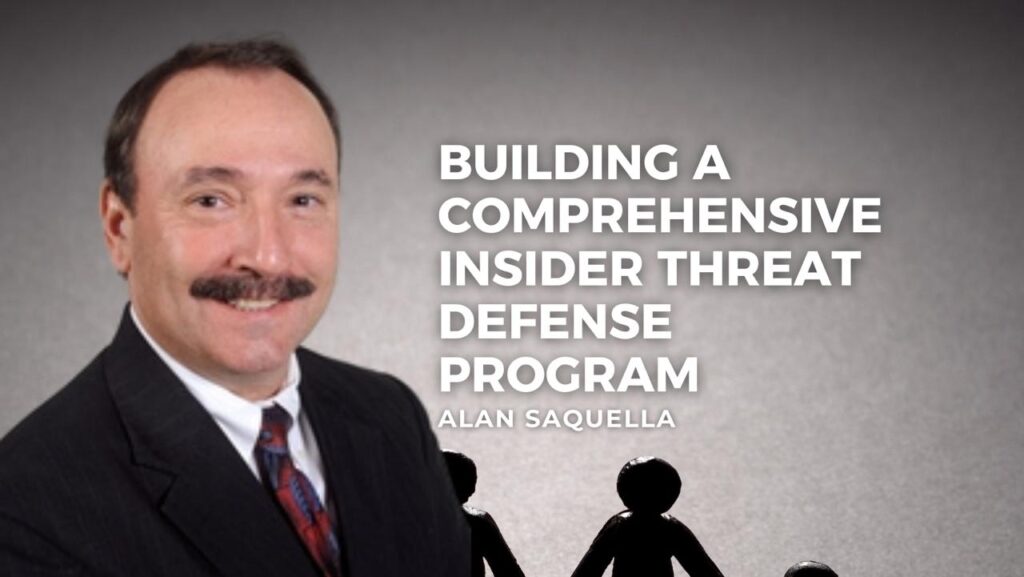
Alan Saquella, MS, CPP, CPE is a full-time Assistant Professor in the College of Business, Security and Intelligence at Embry-Riddle Aeronautical University, College of Business, Security and Intelligence. He has over three decades of experience in corporate security, investigations, investigative interviewing, and intelligence-related disciplines in both the public and private sectors.
Saquella is a former Director of Security Investigations, Investigator, and Polygraph Examiner who has trained investigators, law enforcement professionals, corporate leaders, and security practitioners throughout the United States on modern interviewing techniques, insider threat mitigation, fraud investigations, and workplace violence prevention. He is a Certified Protection Professional (CPP) and Certified Polygraph Examiner (CPE), and regularly serves as a trainer, consultant, speaker, and advisor on matters involving security management, investigative strategy, behavioral analysis, and organizational risk reduction.
In addition to authoring numerous professional articles and papers, Saquella is an active contributor to industry outreach and education initiatives focused on advancing ethical and effective investigative practices, insider threat awareness, and the integration of physical security and cybersecurity strategies. He can be reached https://www.linkedin.com/in/alan-saquella-cpp/.