



Oded Krashinsky
When was Pacific West founded?
Pacific West Academy was founded in the years following the September 11 attacks, during a major shift in the U.S. security industry. After 9/11, regulations tightened across the private security sector, with increased scrutiny on licensing, firearms qualifications, CPR certification, and professional training requirements.
According to founder and CEO Oded Krashinsky, the school began from an internal operational need inside the company’s security division. Rather than relying on outside instructors for recurring certifications and compliance training, the company decided to build its own in-house training program.
One team member was selected and sent for instructor certifications in CPR and firearms training. The company invested in the equipment, training materials, and certification process with the expectation that he would return and train the organization internally. That decision became the foundation of what later evolved into Pacific West Academy.
Today, Pacific West Academy has grown into one of the leading executive protection and security training academies in the United States, specializing in executive protection, tactical training, firearms, threat assessment, and protective operations. Under Krashinsky’s leadership, the academy expanded from a compliance-based internal training program into a nationally recognized vocational institution serving military veterans, law enforcement personnel, and private security professionals.
And how did that decision turn out?
Krashinsky said the company quickly realized that training was more than a certification process. It became a way to evaluate discipline, judgment, communication, and personality traits that are critical in the executive protection industry.
He described training as the “gas station” of the security industry, a central point that supports and influences the entire field.
At the time, the private security industry operated with little standardization. Many personnel were hired and assigned to jobs without consistent procedures or unified operational standards. According to Krashinsky, the growing competitiveness of the industry reinforced the need for structured and standardized training systems.
As Pacific West Academy expanded its programs, the organization increased its operational capacity, strengthened curriculum standards, and advanced through multiple levels of accreditation. In California, the academy received approval to train security professionals and military veterans under the GI Bill.
Today, Pacific West Academy states that its executive protection program is the only program of its kind recognized through a Department of Education-approved accrediting body, allowing academic credits earned through the course to transfer into college-level programs such as criminal justice and related academic fields.
Krashinsky said the accreditation is significant for two reasons. First, it reflects that the curriculum, instruction, and oversight meet standards comparable to accredited higher education institutions in the United States. Second, it creates long-term educational opportunities for veterans and security professionals seeking to build academic credentials on top of their military or protective services experience.
What does PWA offer other than hands-on training?
Krashinsky said one of the academy’s primary goals is helping military veterans transition successfully into civilian life.
According to him, many veterans leave the military after several years of service with strong operational experience but without a clear direction for their next phase in life. He said the academy focuses on providing both structure and a renewed sense of purpose during that transition.
He also emphasized the importance of creating a sense of achievement. By completing professional training and entering the civilian workforce, veterans gain confidence that they can succeed outside the military environment.
Krashinsky said graduates often pursue careers in executive protection and private security while also continuing their education. Many choose to do both simultaneously, an approach the academy actively encourages through its accredited programs and veteran-focused training pathways.
What is unique to PWA?
Krashinsky said Pacific West Academy differentiates itself through a fully integrated training model that includes housing, equipment, and operational resources as part of the program. Students attend the academy for approximately 10 weeks, with lodging and training equipment included in the tuition structure.
According to Krashinsky, the academy’s pricing model was intentionally designed to remain accessible while delivering a broader curriculum than many competing programs. He stated that, when calculated on a per-day basis, the program is among the lowest-cost executive protection courses in the industry.
He said the business model is closely tied to the organization’s veteran-focused mission. Krashinsky noted that approximately 95% of the company’s roughly 340 full-time employees are military veterans. As part of that commitment, veterans receive discounted tuition rates, and the academy includes additional training modules beyond the core curriculum without increasing tuition costs.
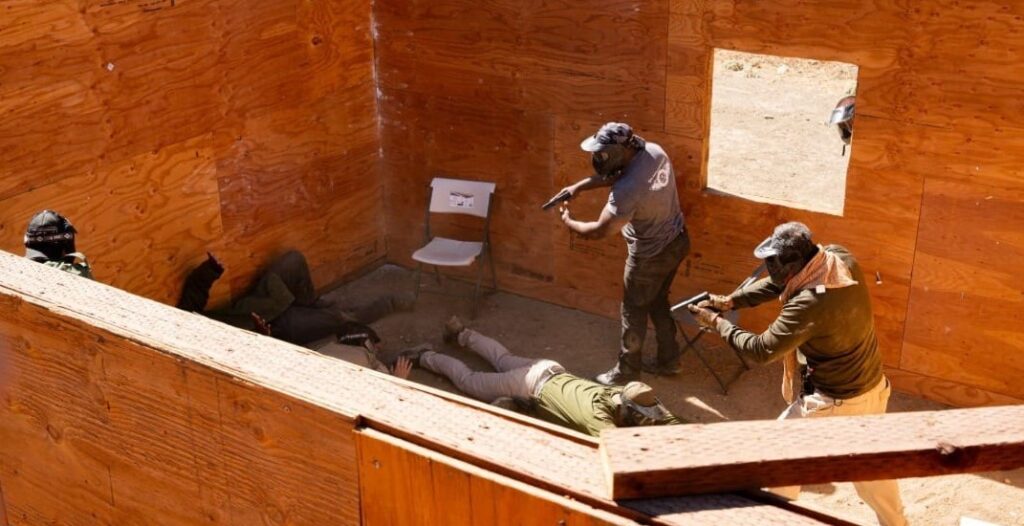
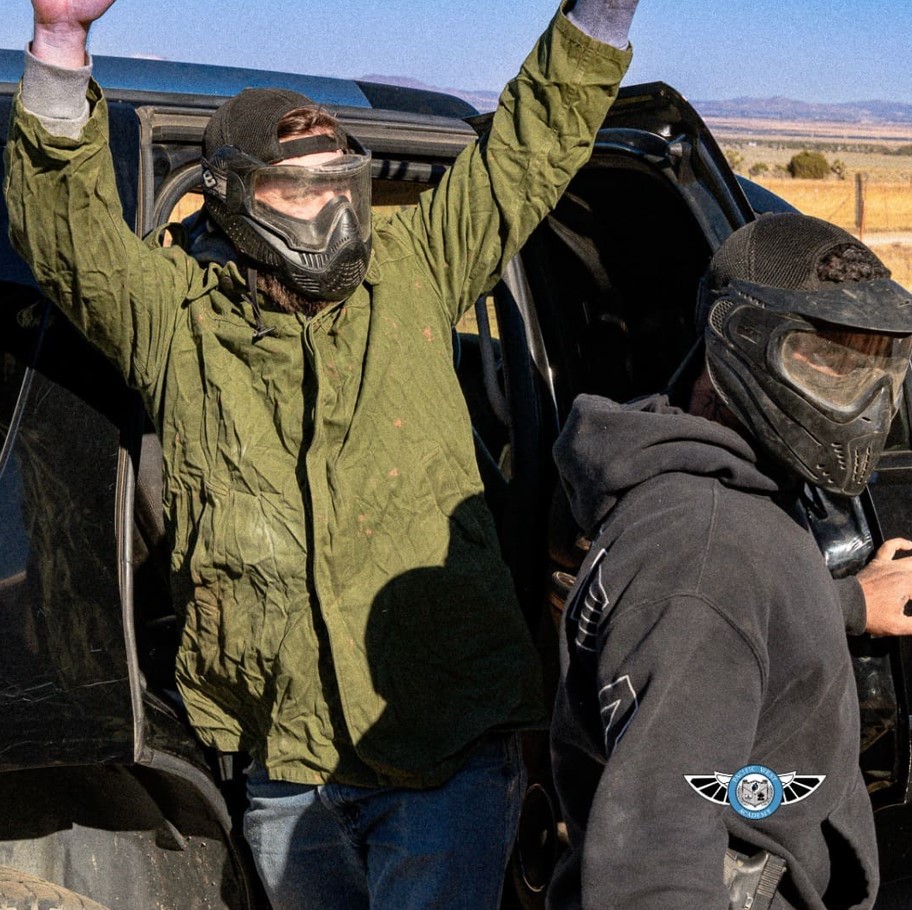
Krashinsky also disclosed that the organization recently invested in a new training facility outside Los Angeles spanning approximately 80 acres. According to him, the site includes residential quarters, classrooms, a large-scale simulation system, a UTM training village, and a dedicated combatives training gym designed to support immersive executive protection and tactical training operations.
Who can attend PWA?
Krashinsky said Pacific West Academy maintains selective admissions standards due to both accreditation requirements and the academy’s employment-focused model.
According to him, the academy is required to maintain strong job placement outcomes, including placing a significant percentage of graduates into employment within the security industry. As a result, applicants are evaluated not only on background and qualifications, but also on motivation, professionalism, and long-term potential.
The admissions process begins with a formal application followed by a written essay in which candidates explain their interest in the program and why they believe they are suited for the industry. Applicants then complete a multi-stage interview process that includes phone screenings, virtual interviews, and in-person evaluations with instructors.
Krashinsky said the academy intentionally keeps class sizes small to preserve a hands-on training environment. Each class typically includes approximately 18 students, with instructors actively involved throughout the program rather than relying on passive classroom instruction. The academy operates roughly 10 to 11 training cycles annually.
He also emphasized the academy’s direct relationship with employers across the private security industry. According to Krashinsky, security companies are regularly invited to review resumes, observe training, and interview students during the course. In many cases, students complete the program with employment opportunities in place.
While Pacific West Academy may recruit top graduates internally, Krashinsky said the organization also works closely with competing firms and intentionally provides outside employers access to students. He described the approach as beneficial not only for graduates but for the professionalization and growth of the executive protection industry as a whole.
Can you give some insights into the training?
Krashinsky said the academy places a strong emphasis on executive protection-focused combatives training, with students participating in daily hands-on instruction throughout the 10-week program.
According to him, one of the most significant aspects of the academy is the personal transformation students experience between the beginning and end of the course. He described noticeable changes in confidence, discipline, professionalism, and physical presence by graduation.
Pacific West Academy also accepts civilian students in addition to military veterans and law enforcement personnel. Krashinsky said civilians make up approximately 20% of each training class. The academy additionally awards one full scholarship during each course cycle, covering the full tuition value of approximately $8,000. Applicants seeking the scholarship are required to submit essays explaining their qualifications and reasons for consideration.
Krashinsky also announced plans to expand the academy’s course structure by allowing professionals to attend individual modules rather than committing to the full 10-week program. The initiative is designed primarily for active executive protection agents and security professionals seeking refresher training or specialized certifications in specific subject areas.
Regarding international students, Krashinsky said the academy is generally eligible as an educational institution to support student visa programs. However, because the current curriculum includes firearms training, international enrollment remains restricted. He said the academy is developing a separate non-firearms version of the program, which would allow the institution to expand enrollment opportunities to international students in the future.
What do you think about online courses in executive protection?
Krashinsky expressed skepticism about fully online executive protection training, arguing that the profession is fundamentally hands-on and cannot be effectively taught through remote instruction alone.
He said executive protection requires practical experience in areas such as protective formations, surveillance detection, firearms handling, combatives, emergency response, communication, and decision-making under pressure, skills that depend heavily on repetition, physical presence, and live evaluation by instructors.
While he acknowledged that certain theoretical subjects can be taught online, Krashinsky maintained that core executive protection training must involve real-world scenarios, direct instructor interaction, and practical field exercises to properly prepare students for operational work.
What is the secret behind PWA’s success? How are the trainers assessed, and who can become a trainer at Pacific West Academy?
Krashinsky said the academy’s operational philosophy is built around teamwork, versatility, and specialization.
According to him, Pacific West Academy operates with a close-knit, team-oriented culture where instructors and staff are expected to contribute beyond narrowly defined roles. He said personnel must be willing to adapt to different responsibilities depending on operational needs, whether training students, supporting logistics, or handling facility-related tasks. Krashinsky described the approach as a leadership model based on setting the example personally.
At the same time, he emphasized that instructors are selected based on deep subject-matter expertise within clearly defined disciplines. Trainers specialize in areas such as combatives, EVOC and protective driving, firearms instruction, or tactical medicine, with each department led by designated instructors holding the appropriate certifications and operational credentials.
Krashinsky said the academy’s accreditation standards also require formal instructor qualifications and oversight. Because Pacific West Academy operates under an accrediting body recognized through the U.S. Department of Education, instructors must meet documented standards similar to those expected within accredited academic institutions.
He added that instructors are encouraged to remain active in the executive protection field through ongoing assignments and client operations. According to Krashinsky, maintaining real-world operational involvement is essential to ensuring that training remains current, practical, and connected to the realities of modern protective services work.
Matt Cheun
What is it like to be an instructor at the best school by EPWired public vote?
Being an instructor at Pacific West Academy has been really rewarding. I think the biggest thing that I talk about when it comes to instruction is the ability to put out information that is potentially going to help our students as they graduate, essentially changing their lives. We’ve all gone down different paths at one point, and getting into a position where we can push information that helps the students and the graduates take that information and shape their lives into different things, whether it be getting into the EP world or anything like that.
What are the directions your students can go if you say that it’s not only protection? What else can Pacific West Academy teach its students?
At Pacific West Academy, students are learning far more than just executive protection. The 10-week program covers everything from hand-to-hand combat, firearms, medical training, and protective driving to communication, situational awareness, and leadership under pressure. Even for students who do not pursue careers in executive protection, the training develops discipline, confidence, preparedness, and the ability to protect themselves and the people around them. The goal is not just to create protectors for clients, but capable first responders in everyday life.

What do you teach?
I primarily teach executive protection fundamentals, firearms, and defensive applications based on real-world operational experience as an active EP agent. My focus is not just teaching students how to shoot, but how to responsibly and effectively use firearms in a defensive and protective capacity. I also integrate concepts from competitive shooting, trauma medicine, and martial arts disciplines like Muay Thai, Kali, Silat, and Jiu-Jitsu to help students understand how performance-based skills translate into real-world protection scenarios. The foundation of everything we teach is simple: we are protectors first.
What do you think about this perspective that it’s talking about soft skills and all kinds of skills, and that firearms should be the last resort to see?
At Pacific West Academy, we strongly believe that firearms are a last resort, not the foundation of protection work. The most effective protectors are the ones who know how to communicate, de-escalate situations, read people, build relationships, and manage conflict before it ever becomes physical. Those soft skills are critical.
At the same time, executive protection requires a complete skill set, and hard skills like firearms, defensive tactics, martial arts, and medical training are force multipliers that may become necessary if a situation escalates beyond verbal control. The reality is that bad situations can still happen despite strong communication and preparation, which is why we emphasize being well-rounded, disciplined, and prepared across every level of response. Whether it is carrying medical equipment, understanding trauma care, or responsibly carrying a firearm where appropriate and lawful, the goal is always the same: maximize safety, preparedness, and the ability to protect others under real-world conditions.
How do you become a Pacific West Academy instructor, and what kind of training do you need to have to stay up to date?
Becoming an instructor at Pacific West Academy is not just about past experience or certifications. It is about maintaining a mindset of constant growth and professional development. One of the core beliefs at PWA is that a complacent instructor is a dangerous instructor.
The industry evolves, tactics evolve, training methods evolve, and instructors have a responsibility to continuously train, learn, and refine their skills. Real expertise is not defined by what you accomplished years ago, but by your willingness to keep improving, stay operationally relevant, and continue learning so you can provide students with current, practical, and effective training based on real-world standards and experience.
What does it take to be a Pacific West Academy instructor?
Being an instructor at Pacific West Academy requires humility, continuous training, and the commitment to constantly improve your craft. At PWA, instructors are expected to stay active in their field, continue taking courses themselves, and consistently strengthen the specific skill sets they teach.
The standard is simple: instructors should be able to perform and demonstrate at a high level, not just explain concepts in theory. The academy places a strong emphasis on credibility through real-world application, ongoing development, and leading by example, so students receive training that is practical, current, and proven under pressure.
In your opinion, should an EP instructor be an EP professional?
At Pacific West Academy, we believe an executive protection instructor should be an active professional in the field whenever possible. Experience matters, but the industry constantly evolves, including tactics, threats, technology, client expectations, and operational environments. Instructors who are still actively working bring current, real-world insight that adds tremendous value to students beyond theory alone.
That does not diminish instructors with past experience, but remaining operational and continuously engaged in the profession helps ensure the training stays practical, relevant, and aligned with the realities students will face in today’s executive protection industry.
Why would you recommend Pacific West Academy to students?
I would recommend that students attend Pacific West Academy because the training is built around real-world executive protection, not theory alone. PWA places a major emphasis on hard skills and practical application, including extensive firearms training, combatives, emergency vehicle operations, medical response, and protective operations under pressure. The philosophy is simple: if a protector is ever forced into a worst-case scenario, they must have the competence, judgment, and discipline to respond responsibly and effectively.
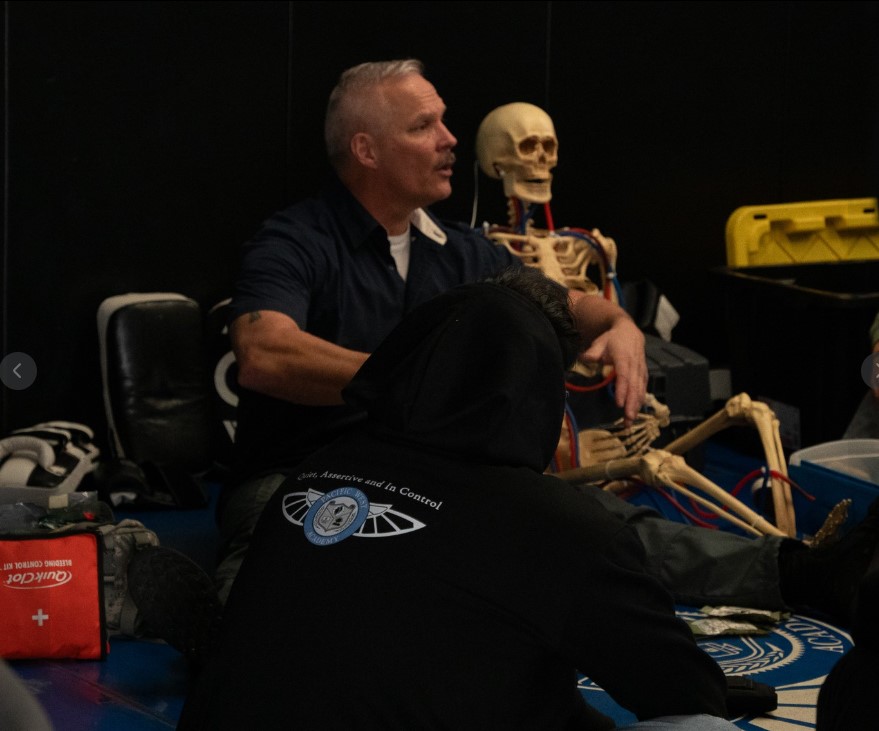
What also separates PWA is the focus on medical training and preparedness. Students are taught trauma response, bleeding control, assessments, and life-saving skills because in real life, medical emergencies are far more common than firearms engagements. The academy believes a well-rounded protector should know how to preserve life, not just defend it.
Most importantly, the instructors are active working professionals who continue to operate in the executive protection industry today. That allows students to learn from current real-world experiences, operational debriefs, planning challenges, and evolving threats, giving them insight that goes far beyond textbook instruction and helping prepare them for the realities of modern executive protection work.
Do you think anybody can become an EP agent, or is this job reserved for a special skill set?
Yes and no. The executive protection world is so different from the military. It’s so different from law enforcement. It’s very different from all of those things. I don’t necessarily think that makes you a good EP agent. EP is its own skill. It really is.
So do I think that everybody can be an EP agent? Yes, in nature. But I also think that there’s a certain type of mentality that needs to be had. I think that there’s a certain type of professionalism that needs to be had. And if those people possess it, absolutely, I think they can.
On the flip side, there are a lot of people who don’t necessarily possess the mindset of understanding what it is to protect somebody when their lives are actually at stake. It is a little bit of a difficult question because the main thing is that skills can be trained, but the mindset cannot. The mindset behind it, having the ability to flip the script when things go south, is something that not everybody possesses, but I think the skill set of the hard skills and all those things, I think those can be developed.
What is your advice for young people trying to get into the EP industry?
My biggest advice to keep in mind is that the EP world is not all glam. There are times when you’re going to be walking a red carpet and things like that. But the reality is that boring is good. If things didn’t happen, that’s a good thing.
My advice is to stay humble, continuously learn, and not fall into the perception of all the movies of things happening.
This is also a very thankless job. We’re putting a lot of people in front of us and protecting them and providing a service. And a lot of times, they may thank you, and they may not. It’s also a very selfless job.
Do you have a success story or something that has remained with you until today?
One of the biggest success stories for me at Pacific West Academy was seeing how the training and mindset developed here translated directly into real-world executive protection work.
I originally came to PWA as a student after working overseas contracts, and shortly after graduating, I was brought on as an instructor and later assigned to work executive protection for a high-profile client. What stood out to me was realizing that executive protection is not about constant action or excitement. It is about trust, professionalism, consistency, and balancing security with customer service in a way that genuinely improves the client’s life while keeping them safe.
Over time, the skills, discipline, and mindset developed through training and operational experience allowed me to build a level of trust where the client viewed me almost like family. That is one of the most valuable aspects of this profession. Beyond the public image and celebrity status, you see people for who they really are, and they trust you with their safety, their family, and their everyday lives. That level of responsibility and trust is something you earn through competence, character, and consistency, and PWA played a major role in preparing me for that reality.
Any final advice for students trying to choose where they’re going to train?
The biggest thing that people need to realize when they are trying to decide on what school they’re going to go to or any kind of training that they’re going to get from anywhere is to make sure that their instructors are working professionals. Maybe not just in the EP world, but in anything that you’re trying to learn, make sure they are actively doing it right. They need to actively be doing it and actively be training that and learning that so that your instructors can accordingly.
But number two, whenever you’re attending any kind of academy, make sure you go with an open mind. There are a lot of different things that are happening in the industry, and the biggest thing is when students show up to gain the training and find a place that’s going to benefit them. Yes, the training side of it, but on the personal level as well, so all of our staff here, all of the instructors, we remain accessible to the students even when they leave here, so when they leave here, if they need letters of recommendation, if they need referrals, if they need us to help them plan things.
I’ve had students reach out to me and say, “Hey, you know, I just got my first big detail. Can you help me plan it?” And we’ll sit on a FaceTime call and plan their detail together. So find instructors who are not there just for their paycheck, but are there for the relationships that they build in the industry. Find somebody who actually cares.
Finally, at the end of the day, whenever you find training and are going to get training, dive deep into that training and make sure you remain an asset, not a liability. So basically, you are not just instructors, you are mentors.
Do you see yourself in the future still a teacher, or do you want to go back to operations?
I foresee myself staying in instruction, being able to teach and mentor people trying to get into the X field. Being able to help people grow their skill set. I’m a huge advocate for constantly training as much as possible, because you can never know everything. So I foresee myself continuously being an instructor simply because I want to see people succeed and I want them to become better protectors for themselves and the people around them, regardless of what industry they’re in. And if I can be a small part of their training journey, that’s all that matters to me.