



As one of the biggest sporting events approaches, many have begun to wonder how good the FIFA World Cup security in Mexico will be and what precautions to take. Here’s everything to know about logistics, planning, crime, and thoughts from industry experts Mark Ledlow and Hector Robles Conde.
What Mexico Is Doing to Ensure Safety
Currently, Mexico is preparing for one of the largest security operations in its history as it gets ready to host matches during the 2026 FIFA World Cup. With millions of fans expected to visit the country during the tournament, authorities have launched a comprehensive security strategy designed to protect visitors, players, officials, and critical infrastructure.
At the center of these efforts is Plan Kukulkan, a nationwide security initiative that brings together federal, state, and local agencies in a coordinated response. Named after the feathered serpent deity of Maya mythology, the plan aims to strengthen security not only in host cities but also at training facilities, transportation hubs, tourist attractions, and key public gathering locations.
Authorities have announced the deployment of approximately 100,000 security personnel across the country, with a significant concentration in the host cities of Mexico City, Guadalajara, and Monterrey. The security presence will include local police, federal law enforcement, military personnel, specialized response units, tourism police, and aerial surveillance assets.
Mexico City, which will host the tournament’s opening match, is expected to deploy more than 50,000 officers during the event. Officials have expanded the use of surveillance cameras, intelligence collection, traffic management resources, and rapid response capabilities to help identify and address potential threats before they escalate. Specialized tourism police units will also be used to assist visitors and respond to incidents involving foreign guests.
Recent events have further shaped security planning. Following a shooting at the Teotihuacan pyramids in April 2026 that killed one tourist and injured several others, authorities moved quickly to reinforce security at major tourist sites. Additional police patrols, bomb detection teams, and enhanced screening measures have been introduced at high-profile attractions expected to receive large numbers of visitors during the tournament.
Security preparations extend beyond stadiums and tourist destinations. Authorities are also focusing on transportation networks, crowd management, emergency medical response, and critical infrastructure protection. Managing the movement of millions of visitors between airports, hotels, fan zones, and match venues presents a significant challenge, particularly in densely populated cities such as Mexico City.
Host cities face different security realities. While Mexico City benefits from extensive surveillance infrastructure and a large law enforcement presence, Guadalajara and Monterrey continue to contend with criminal activity linked to organized crime groups operating in their regions. Authorities have responded by increasing patrols, strengthening intelligence efforts, and dedicating additional resources to areas expected to see elevated tourist activity.
Officials have also warned visitors about more common risks that often accompany major international events, including pickpocketing, ticket fraud, scams, and other opportunistic crimes. Public awareness campaigns and increased police visibility are intended to reduce these risks while maintaining a welcoming environment for visitors.
For security professionals, FIFA World Cup preparations highlight the complexity of protecting a global sporting event in a country that continues to confront broader security challenges. Success will depend on effective coordination between agencies, proactive threat mitigation, and the ability to maintain a secure environment both inside and outside official tournament venues.
International Cooperation
The 2026 FIFA World Cup marks the first time the tournament will be jointly hosted by three nations, creating a security environment unlike any previous World Cup. With matches taking place across Mexico, the United States, and Canada, authorities have spent years developing cooperative frameworks to address threats that transcend borders and jurisdictions.
Security planning has required extensive coordination among military, law enforcement, intelligence, border security, and emergency management agencies across all three host nations. The scale of the tournament, which is expected to attract millions of visitors over nearly six weeks, has made information sharing and operational coordination a top priority.
According to U.S. Northern Command (USNORTHCOM) Commander Gen. Gregory M. Guillot, the World Cup provides an opportunity to demonstrate the strength of security partnerships throughout North America. Speaking before the Senate Armed Services Committee in March 2026, Guillot expressed confidence in the collective ability of the three nations to provide a safe environment for the tournament.
The United States and Mexico have significantly expanded military-to-military engagement in recent years, conducting joint training exercises and strengthening operational relationships. These partnerships have improved interoperability, communication, and trust between security organizations that may be called upon to support World Cup-related operations.
Security cooperation extends beyond military organizations. Federal law enforcement agencies, intelligence services, border authorities, and emergency management organizations have established mechanisms to share information related to potential threats, suspicious activities, and emerging risks. This level of collaboration is particularly important during an event where teams, officials, and supporters will move frequently between countries.
Border security and transportation coordination are also critical elements of the overall strategy. Airports, ports of entry, and major transportation hubs are expected to experience significant increases in traffic throughout the tournament. Authorities have worked to improve screening procedures, contingency planning, and communication channels to manage the movement of visitors while maintaining security standards.
Counterterrorism planning has been another major area of focus. Large international sporting events remain attractive targets for malicious actors seeking publicity and disruption. As a result, host nations have invested heavily in intelligence gathering, threat monitoring, and protective security measures designed to identify and address potential threats before they materialize.
The World Cup also serves as a test of multinational crisis response capabilities. Whether responding to public safety incidents, severe weather, transportation disruptions, cyber threats, or other emergencies, authorities must be prepared to coordinate across borders and share resources when necessary. The ability to rapidly exchange information and support decision-making will be essential to maintaining continuity throughout the tournament.
For security professionals, the 2026 World Cup represents a significant case study in multinational event security. While each host nation retains responsibility for security within its own borders, the success of the tournament will depend heavily on the effectiveness of the partnerships, communication channels, and cooperative frameworks developed long before the first match kicks off.
According to Mark Ledlow, there are going to be millions and millions of people coming into Mexico, Canada, and the US to support the World Cup. Everybody’s excited to make some money and be around the World Cup, and that business opportunity and networking. He also says that the who’s who will be going to football matches. A lot of young kids, people from all over the world, are flying in. He believes he can guarantee all the bad actors around those stadiums at the World Cup are looking for opportunities to make a hit.
He also continues to say that that’s the hot topic right now. Everybody’s hoping they get a call. He was with Kevin Palacios and doing a webinar on protection in LATAM and the World Cup in Mexico. Ledlow says it was a good webinar on the considerations for executive protection on what to do, from communications to doing proper advance work, and protective intelligence.
Travel Security Advice
The 2026 FIFA World Cup marks the first time the tournament will be jointly hosted by three nations, creating a security environment unlike any previous World Cup. With matches taking place across Mexico, the United States, and Canada, authorities have spent years developing cooperative frameworks to address threats that transcend borders and jurisdictions.
Security planning has required extensive coordination among military, law enforcement, intelligence, border security, and emergency management agencies across all three host nations. The scale of the tournament, which is expected to attract millions of visitors over nearly six weeks, has made information sharing and operational coordination a top priority.
According to U.S. Northern Command (USNORTHCOM) Commander Gen. Gregory M. Guillot, the World Cup provides an opportunity to demonstrate the strength of security partnerships throughout North America. Speaking before the Senate Armed Services Committee in March 2026, Guillot expressed confidence in the collective ability of the three nations to provide a safe environment for the tournament.
The United States and Mexico have significantly expanded military-to-military engagement in recent years, conducting joint training exercises and strengthening operational relationships. These partnerships have improved interoperability, communication, and trust between security organizations that may be called upon to support World Cup-related operations.
Security cooperation extends beyond military organizations. Federal law enforcement agencies, intelligence services, border authorities, and emergency management organizations have established mechanisms to share information related to potential threats, suspicious activities, and emerging risks. This level of collaboration is particularly important during an event where teams, officials, and supporters will move frequently between countries.
Border security and transportation coordination are also critical elements of the overall strategy. Airports, ports of entry, and major transportation hubs are expected to experience significant increases in traffic throughout the tournament. Authorities have worked to improve screening procedures, contingency planning, and communication channels to manage the movement of visitors while maintaining security standards.
Counterterrorism planning has been another major area of focus. Large international sporting events remain attractive targets for malicious actors seeking publicity and disruption. As a result, host nations have invested heavily in intelligence gathering, threat monitoring, and protective security measures designed to identify and address potential threats before they materialize.
The World Cup also serves as a test of multinational crisis response capabilities. Whether responding to public safety incidents, severe weather, transportation disruptions, cyber threats, or other emergencies, authorities must be prepared to coordinate across borders and share resources when necessary. The ability to rapidly exchange information and support decision-making will be essential to maintaining continuity throughout the tournament.
For security professionals, the 2026 World Cup represents a significant case study in multinational event security. While each host nation retains responsibility for security within its own borders, the success of the tournament will depend heavily on the effectiveness of the partnerships, communication channels, and cooperative frameworks developed long before the first match kicks off.
Safety Considerations from Hector Robles Conde
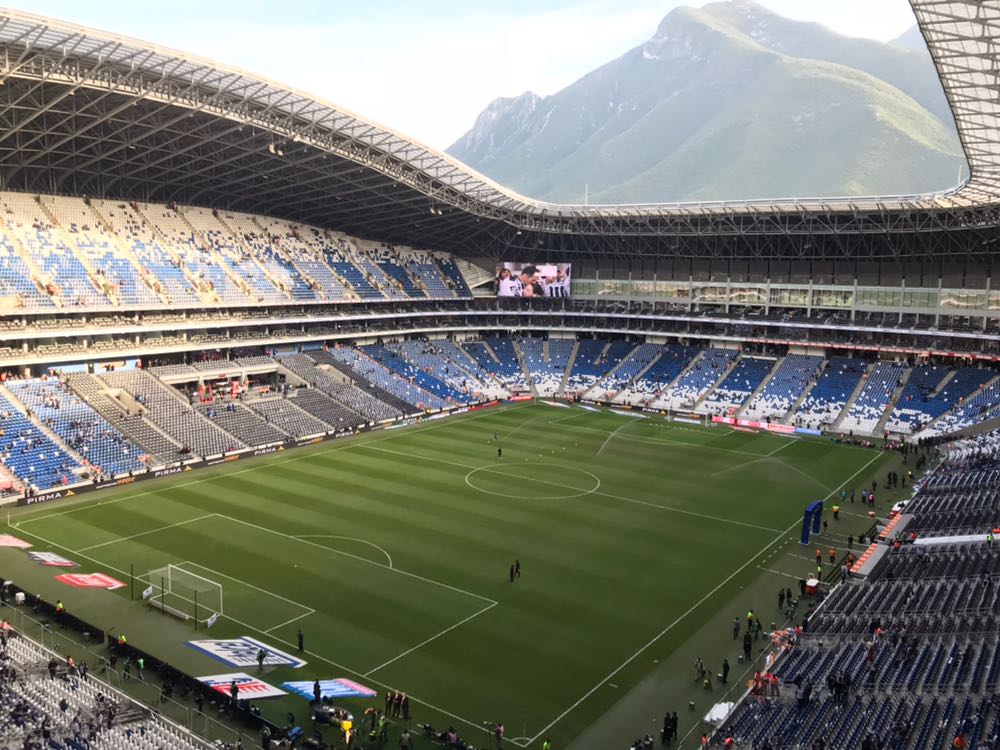
The local law enforcement and security forces, in coordination with the Federal Government and FIFA, have established protocols to protect the public/fans inside and outside of FIFA-established perimeters (2 kilometers) in proximity to the stadiums in all 3 cities: Mexico City, Guadalajara, and Monterrey. This means that all fans without proper accreditation will not be able to park in the stadium’s car parks. Only FIFA sponsors, FIFA top executives, dignitaries, and special guests will be able to park within the 2-kilometer perimeter. Fans will have to walk to the stadium from the designated pickup-drop-off areas. With these measures, security will be able to spot and profile risky behaviours and fans.
Mexico City will deploy 45,000 local police agents from different police units, plus the Guardia Nacional agents. Guadalajara and Monterrey will deploy 18000 police and Guardia Nacional agents. This is to safeguard Fan Fest locations, main avenues, crowded hotel areas, touristic sites (museums, galleries, historic centre, etc), and financial and commercial districts where fans (visitors and locals) will gather to experience the event.
FIFA has established RSOCs in each city to monitor daily events and to report them daily, with or without a match. The objective is to prevent and mitigate any situation that could affect the transportation of fans using the official World Cup transportation services (buses, subway, city train, bicycle lanes) to and from the stadiums and FIFA Fan Fest locations, VIPs, and dignitaries.
In coordination with the private sector (private security), FIFA and the Mexican government have established protocols for physical security (Gates & Guards) in all FIFA Fan Fest and other FIFA locations, as well as for EP services. Those providing services to FIFA special guests and executives have been certified by FIFA Security Teams. Other EP companies will be able to provide services freely to their clients following the restrictions in place imposed by the local police, federal forces, and FIFA.
The public needs to be ready to face petty crime in touristic areas (hotel surroundings, museums, historic centre, etc), typical of a large city. Mexico City has 22 million inhabitants, and Guadalajara and Monterrey have approximately. 6-8 million each. There could be demonstrations on the streets from political pressure groups. The public needs to follow recommendations to avoid being a soft target. Carry only the necessary cash and credit cards, do not expose excessive luxury, and beware of atypical or too friendly behaviour from locals and foreigners, especially in bars and restaurants at night. Pick-pocketing in the Underground is common and active.
There will be increased security in public transportation and fan fest areas. Avoid suffering from the passport syndrome: Do not put your guard down or think nothing will happen to you in a foreign country. What happens in Vegas, stays in Vegas, is a lie. Everything will be known through social networks. Avoid drinking too much; local police will not be tolerant. Avoid visiting risky areas of the city during the day and especially at night. Do not fall into the euphoria trap. Bad things happen. Do not do anything you would not do in your hometown.
FIFA considers that Organized crime is under control and would not affect the World Cup. Terrorism is not characteristic of Mexico. In any case, in security, there are no guarantees. Prevent, be proactive, trust, and verify before acting.
Obviously, traffic will be heavy in all three cities as there will be restrictions in mobility in many streets and avenues, especially on Match days, fan fest locations, international press, and FIFA sites. People will need to be patient and plan well ahead of their daily trips, whether they are locals or visitors.
Vehicle Security and Safety from Gerardo Corona
For the Mexico World Cup, I would look at traveler safety through the Vehicle Security Quadrant: Driver, Vehicle, Route/operational environment, and Passenger. In mega-events, most incidents do not start inside the stadium; they often happen during movement, waiting, parking, arrivals, departures, and route deviations. That is why vehicle security should be treated as part of the event’s protective ecosystem, not just as transportation. My framework is based on the vehicle security quadrant I use for executive protection and high-risk environments.
Driver: Travelers should avoid improvising transportation. Use official event transportation, hotel-arranged vehicles, vetted executive transport, regulated taxis, or verified app-based services. A good security driver is not only a driver; he or she should understand defensive driving, local traffic behavior, surveillance indicators, and how to react during congestion, protests, checkpoints, or attempted robberies
Vehicle: The vehicle should match the risk, the city, and the passenger profile. For most visitors, that means a reliable, low-profile vehicle in excellent mechanical condition, with good tires, working communications, GPS, dashcams, and no visible luggage or valuables. For VIPs or high-profile travelers, the vehicle may require a higher level of protection, but the key principle is always the same: ballistic resistance or security features are only useful if the vehicle remains mobile, functional, and appropriate for the operational environment.
Routes / Operational environment: In Mexico, the greatest exposure will often be around airports, hotels, stadiums, fan zones, nightlife areas, parking zones, and intercity movements. Routes should be planned in advance, with primary and alternate options, updated traffic intelligence, and awareness of temporary closures, demonstrations, criminal hotspots, and high-congestion corridors. Best practice in World Cup-style events is to move early, avoid unnecessary night travel, and never let navigation apps alone make security decisions.
Passenger: Travelers also have a role. They should keep a low profile, avoid displaying watches, jewelry, phones, credentials, or cash, and remain attentive during embarkation and disembarkation. In vehicle security, the most vulnerable moments are often transitions: getting in, getting out, waiting curbside, or walking between the car and the venue. A safe passenger is one who communicates plans, follows the driver’s instructions, avoids distractions, and understands that personal security starts before reaching the stadium.